

How Deep Should Laundry Room Cabinets Be?
Standard Dimensions, Layout Tips & Moisture-Resistant Solutions

Laundry rooms often get planned at the end. Yet, they rank among the toughest spots in any home. Unlike kitchens or closets, these areas deal with steady dampness, shakes from machines, and lots of door openings. Picking the wrong cabinet depth or height can cause everyday hassles, early wear on materials, and expensive fixes later.
This piece covers how deep laundry room cabinets should be. It also looks at how cabinet sizes fit with appliance spaces. Plus, it shares which materials hold up best in wet settings. If you are setting up a small laundry closet or a big utility space, knowing these basics helps you choose smart options that last.
Why Laundry Cabinet Dimensions Matter More Than You Think
Laundry cabinets differ from plain kitchen ones moved to another spot. The everyday needs vary a lot. Washing machines and dryers produce warmth, vapor, and jolts. Soaps and cleaners bring chemical contact. Doors and drawers get pulled open while machines hum along. So, the space around them and easy reach matter greatly.
Wrong cabinet sizes can lead to machine doors bumping into cabinet faces. They might block easy access to soap storage. Or they could clog the air flow. In the long run, cabinet sides might swell up. These problems pop up often in tight laundry closets. There, space counts a ton. Right-sizing goes beyond looks. It ties straight to how well things work, safety, and how long they hold up.
How Deep Should Laundry Room Cabinets Be?
Standard Depth for Base Laundry Cabinets
The usual depth for base laundry room cabinets sits at 24 inches (610 mm). This size matches typical front-loading washers and dryers. Those machines measure about 27 to 30 inches deep overall. That includes hoses and air space needs.
A 24-inch cabinet depth gives room for full drawer access and slide-out spots. It keeps appliance doors from getting in the way. Plus, it fits big soap jugs and laundry bins nicely. It also lines up well with nearby kitchen or utility cabinets in open setups.
Thinner base cabinets, like 21 inches, might fit in super cramped areas. However, they cut down on the storage room. And they weaken the built strength.
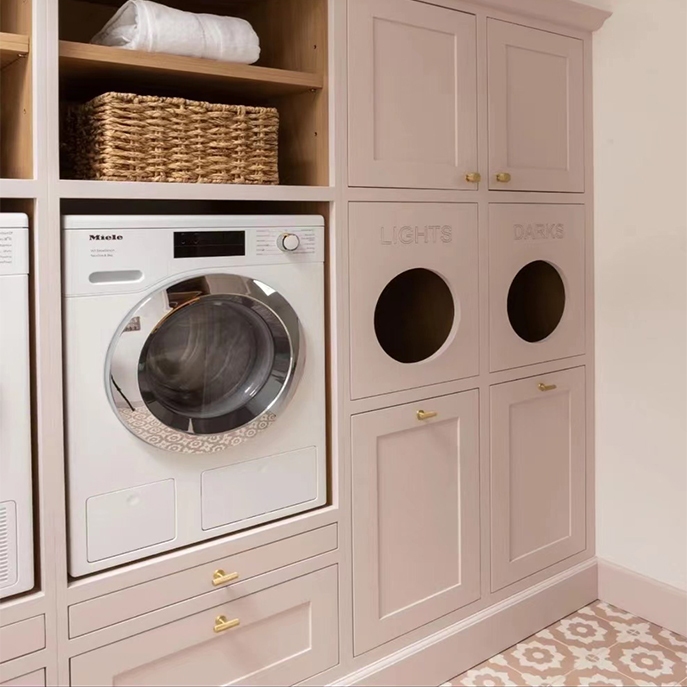
Standard Depth for Upper Laundry Cabinets
Upper laundry cabinets generally run 12 inches (300 mm) deep. This size balances storage needs with headroom. It works especially well in slim spaces.
Thicker upper cabinets bring risks. They might lead to knocks on the head. They can cut down on sight lines to lower machines. Also, they make small laundry rooms look too bulky.
In most houses, 12-inch upper cabinets for laundry room handle light stuff fine. Think soaps, towels, and cleaning tools.
When Are 24-Inch Deep Laundry Cabinets Necessary?
24-inch deep laundry room cabinets sometimes suit tall pantry-like storage. Or they fit built-in washer-dryer setups. These styles shine when the laundry spot doubles as a pantry or extra storage zone. They also work if appliances hide behind cabinet doors. But you must plan the air flow and back space carefully.
In such cases, cabinet depth covers appliance measurements. It also factors in air circulation, repair access, and door swing paths.
Laundry Room Cabinet Height and Clearance Guidelines
How High Should Laundry Room Cabinets Be?
Upper laundry cabinets usually mount 54 to 60 inches from the floor. The exact spot depends on machine height and user comfort. When placing cabinets over washers and dryers, aim for at least 1–2 inches above the top. This gives wiggle room for shakes and air movement.
For stacked washer-dryer pairs, height planning matters even more. Bad vertical gaps can block upkeep or hurt machine efficiency over time.
Tall Laundry Cabinets: Storage vs Accessibility
Tall cabinets often measure 84 to 96 inches high. Floor-to-ceiling designs boost storage space. But use them wisely.
They offer perks like smart vertical spots for bulky goods. And they create a neat, fitted look.
Yet, they have downsides. Top parts might need a stool to reach. Also, they expose more material to warm, damp air up high.
Mixing base cabinets, wall units, and one tall piece usually hits the sweet spot. It blends easy access with good capacity.
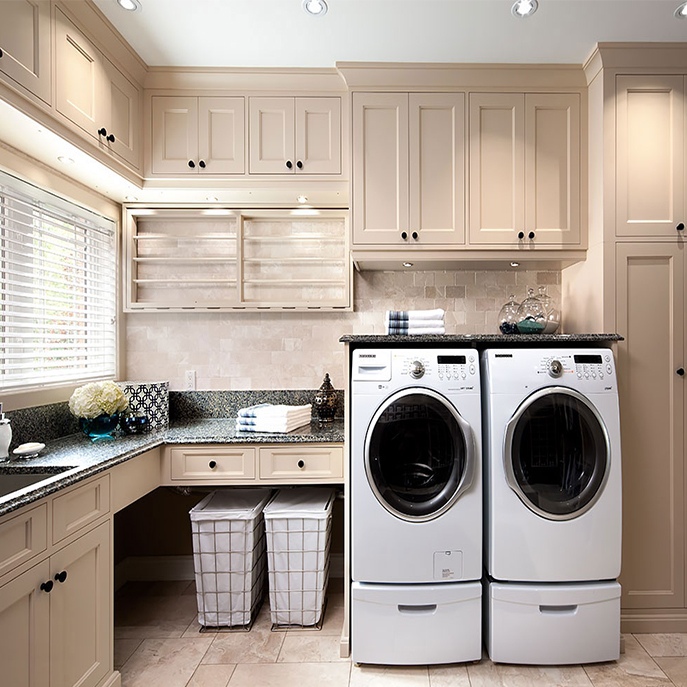
Laundry Closet Depth vs Cabinet Depth
Laundry closets often get shortchanged during early plans. A basic one needs to be at least 36 inches deep. Deeper works better if cabinets join in.
Typical setup errors include fitting cabinets without room for appliance door swings. They skip back space for hoses and air vents. Or they put deep cabinets right in front of slim machine nooks.
Good measuring makes sure cabinets don’t mess with machine use. It also lets doors and drawers swing open without trouble.
Best Materials for Moisture-Resistant Laundry Room Cabinets
Why Moisture Resistance Is Essential
Laundry rooms face ongoing steam, drips, and stray water hits. Regular wood-like materials can twist, peel apart, or puff up if not shielded well.
Water harm starts at bare panel edges. So, edge finishes matter as much as the main material pick.
Recommended Cabinet Materials
Top-notch man-made boards with strong damp-proof layers do great in laundry spots. These boards come from careful machine work and smart edge seals. That setup guards better against water sneaking in. Smooth-edge tape stops cracks where dampness slips through. It boosts how long things last a lot.
Machine-made board handling keeps quality steady across all parts. It cuts down on differences that cause early breakdowns. When makers follow European and U.S. standards, size steadiness and surface strength hold up better in moist areas.
Melamine-covered boards with damp-proof insides make a solid pick for laundry rooms. They clean up easily, resist chemicals, and save money. Best of all, they keep going strong without cutting corners on life span.
In professional cabinet manufacturing, Refor Furniture applies automated panel processing and seamless edge banding to improve moisture resistance and dimensional stability.
Custom vs Prefab Laundry Room Cabinets
| Aspect | Prefab Cabinets | Custom Laundry Cabinets |
| Size flexibility | Fixed dimensions | Fully adjustable |
| Moisture resistance | Material-dependent | Selectable by environment |
| Appliance integration | Generic fit | Appliance-specific |
| Long-term durability | Moderate | High |
| Installation tolerance | Limited | Optimized |
Ready-made cabinets suit basic setups with set sizes. But tailored ones adapt exactly to machine types, room depth, and air needs. This cuts setup mistakes and ongoing fix-ups.
In custom cabinet projects handled by experienced manufacturer Refor Furniture, cabinet depth and ventilation clearances are typically adjusted to specific appliance models.
Practical Layout Tips for Modern Laundry Rooms
Smart laundry cabinet setups focus on smooth flow. Units over washers and dryers must not block machine reach. Air gaps need to stay clear, particularly for dryers. Storage areas should sort items by how often you grab them. Put daily needs at waist to shoulder level.
Built-in slide drawers, hidden repair panels, and even cabinet sizes all help. They make a workable, easy-care laundry area.
Conclusion: Designing Laundry Cabinets That Last
The best laundry room cabinet depth and height hinge on machine sizes, room scale, and material strength. Usual sizes like 24-inch base cabinets and 12-inch upper ones fit most spots. But damp-proof materials and careful building count just as much. Good planning stops daily annoyances. It keeps cabinets steady and useful for years.
Drawing on practical manufacturing experience, Refor Furniture emphasizes that correct cabinet dimensions and moisture-resistant materials are essential for long-term performance in laundry environments.
Frequently Asked Questions
1. Is 24 inches too deep for laundry room cabinets?
No. A 24-inch depth stands as standard for base laundry cabinets. It pairs nicely with most front-loading washers and dryers. Just keep proper space around them.
2. Can kitchen cabinets be used in laundry rooms?
They can. But only if the materials and edge seals handle dampness well. Laundry spots demand stronger protection than dry kitchen areas.
3. How much clearance is needed above a washer and dryer?
A clearance of 1–2 inches above appliances is recommended. It allows vibration tolerance and airflow.
4. Are upper laundry cabinets necessary in small rooms?
Upper cabinets help out. But in tight spots, keep them to 12 inches deep. That avoids headspace problems.
5. What material lasts longest in laundry room cabinets?
Moisture-resistant engineered panels with seamless edge banding offer the best balance. They provide durability, steadiness, and simple upkeep in wet settings.


