

Laundry Room Revolution: Designing Functional and Stylish Utility Spaces
A shift inside today’s laundry area is clear now. Not hidden beneath low light in some corner basement. Now you see it up front, built into how the space feels and looks. That shift wants every square foot put to use. Tying things together without losing personal touch, areas throughout share a common thread. Built-in features take center stage – design choices shaped around function. Quality cabinetry stands out because it makes daily tasks feel natural.

Precision Planning for the Modern Utility Space
Good laundry room design starts with careful space planning. Kitchens often center on the “work triangle” idea. But laundry rooms follow straight-line tasks: sorting, washing, drying, and folding. To make this flow smooth, one needs a solid grasp of usual sizes for machines and cabinets.
Mastering Laundry Room Depth and Dimensions
A key element in a working layout is the laundry room depth. Many owners think a basic 24-inch cabinet depth works fine. However, machines show otherwise. Most current front-load washers and dryers reach 30 to 35 inches deep. Designers suggest at least 38 to 40 inches of clear space. This covers needs like air vents, water lines, and power plugs.
For laundry cabinet dimensions, keeping things uniform matters a lot. Lower cabinets usually stand at 36 inches tall. This gives a handy spot for folding clothes. Widths differ quite a bit, though. They go from 9-inch narrow pull-outs for soaps to 48-inch wide doors for big towels. Fitting these sizes into an overall scheme means nothing goes to waste. Plus, the “revolution” stays both useful and nice to look at.
Ergonomics and Accessibility
The laundry room cabinet height from floor sets a norm that affects everyday ease. In typical setups, upper cabinets hang 54 inches up from the ground. This leaves about 18 inches above a usual 36-inch counter. Such spacing suits items used often, like spot cleaners and fabric softeners. Homes with top-load washers might raise this to 60 inches or higher. That way, the top opens wide without bumping the cabinets.
Optimized Storage Strategies
Storage forms the base of any space update for chores. The point is to go past basic shelves. Instead, adopt targeted fixes that tuck away mess and speed up tasks.
Overhead and Hidden Cabinet Solutions
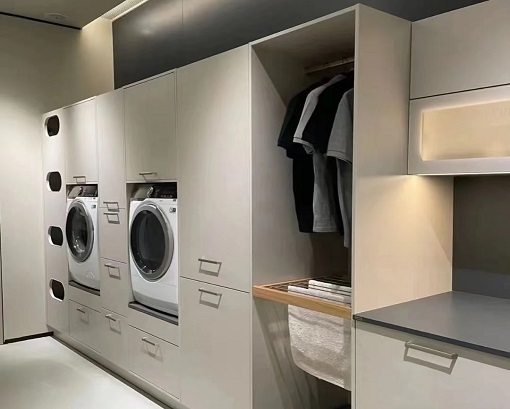
Making use of height proves vital in tight houses. Overhead washing machine storage lifts cleaners safely out of kids’ and animals’ reach. Yet, it keeps them easy to grab near the washer. For a clean, tidy appearance, fresh designs often add hidden washer and dryer cabinets. These made-to-order pieces use “pocket doors” that slip into the sides. As a result, the wash area disappears fully when idle. This fits well for spots in passages or rooms that serve multiple uses.
The Versatility of Modular and Pantry Cabinets
People seeking a mix of ease and tailoring find modular laundry cabinets quite handy. These ready-made sections adjust to fit different wall sizes. They give a “somewhat custom” vibe without a high cost.
On top of that, the growth of big “all-in-one utility areas” has boosted the laundry pantry cabinet. This full-height piece acts as a main spot for large stocks, vacuums, and pressing tools. It blends storage like a food pantry with wash needs. Thus, owners can gather all upkeep items into one neat area.
Aesthetic Trends and Cabinetry Styles
Usefulness comes first, of course. Still, the visual side of the laundry room boosts a home’s market worth and the user’s routine joy.
Farmhouse and Shaker Styles: A Timeless Duel
Farmhouse laundry cabinets lead in popularity right now. They often show raw wood looks, sink fronts with edges, and soft, earthy shades. This setup builds a warm, homey feel. It turns the wash task into something less like factory work.
In contrast, shaker style laundry cabinets hold top spot for flexibility. They have simple edges and inset middle parts. Shaker fronts can suit old or new vibes based on fittings and hues. Their basic form makes wiping easy. This counts a lot in a place full of fluff and grit.
Manufacturing Excellence and Material Science
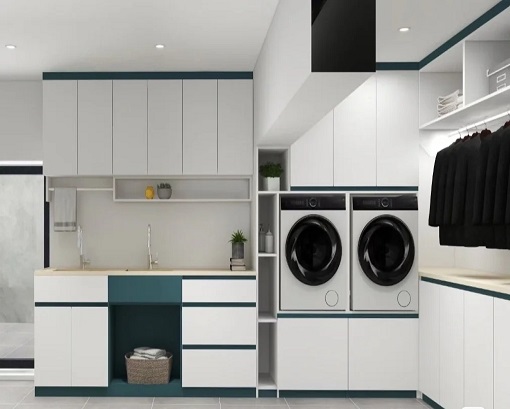
Laundry cabinets face constant tests from damp air and shifting warmth. That’s why pro building matters so much. Refor Furniture tackles these issues with machine-guided lines and better sealing methods. Our craft give boards strong protection against wet. It avoids the cracks that cause bending in cheaper goods.
Using set machine processes, Refor Furniture keeps steady quality that meets world rules. This accuracy helps especially in tricky plans. Those include built-in machines and special add-ons like slide-out baskets.
Data Comparison: Laundry Cabinet Solutions
|
Cabinet Type |
Standard Depth |
Primary Benefit |
Best For |
|
Standard Base |
24″ |
Ample folding surface |
Traditional side-by-side setups |
|
Modular Laundry Cabinets |
12″ – 24″ |
Quick installation |
Fast renovations |
|
Laundry Pantry Cabinet |
24″ |
High-volume storage |
Small homes needing consolidation |
|
Wall/Overhead |
12″ |
Vertical space utility |
Detergent and supply storage |
The Impact of Customization
The real shift in chore space design lies in tailored options. Custom cabinets let in special touches. Examples include racks for air-drying, spots for folding, and even baths for pets. Refor Furniture leads here. We offer pro help in design and making to build these valuable, one-of-a-kind areas.
Homeowners keep putting money into practical comforts. So, the laundry room stays a main spot for home updates. Mixing solid materials with body-friendly plans and a sharp style goal turns it around. Now, it’s not a dull task spot. Rather, it shines as a key part of today’s living space.
Frequently Asked Questions
What is the ideal depth for a laundry closet with front-loading machines?
The ideal laundry room depth for front-loading machines is approximately 34 to 38 inches. While the machines themselves are often 30-33 inches deep, you must account for 4-6 inches of space behind the unit for plumbing, dryer venting, and cords.
How high should I hang my upper laundry cabinets?
Standard laundry room cabinet height from floor is usually 54 inches. This allows for a 36-inch counter and an 18-inch “backsplash” area. If you have a top-loading washer, increase this to 60-64 inches to ensure the lid doesn’t hit the cabinet when opened.
Are Shaker cabinets good for laundry rooms?
Yes, shaker style laundry cabinets are highly recommended. Their flat, recessed panels are easier to wipe down than ornate traditional cabinets, and their timeless design fits almost any home aesthetic, from modern to farmhouse.
What is the benefit of a laundry pantry cabinet over standard shelving?
A laundry pantry cabinet offers superior organization by utilizing vertical space. It can hide tall items like mops and ironing boards while providing deep shelves for bulk detergent storage, which is much more efficient than shallow, open shelving.
How do I hide my laundry machines in a multi-purpose room?
The best way is to use hidden washer and dryer cabinets. These are deep, custom cabinets with bi-fold or pocket doors that completely enclose the appliances, making the room look like a standard living area or kitchen when the laundry is not in use.


